During the warmer seasons, Maryland’s glorious Chesapeake Bay is home to workboats catching blue crabs.
There are jet skiers everywhere, and weekend sailors chasing the breeze.

In the fall, “skipjack” crews dot the bay in pursuit of oysters. This group is the last sail-powered fishing fleet in the United States.
But the cultural quirkiness doesn’t end at the water.
The state’s official sport is jousting!
From the wild ponies of Assateague Island, to the running of the Preakness, to the annual hosting of the biggest steeplechases, Maryland’s special love of horses exists at all levels of their society.

Jeff Kubina from Columbia, Maryland, CC BY-SA 2.0, via Wikimedia Commons
The Mighty Maryland Economy
Maryland’s economy is the 15th largest in the United States, with a GDP of 428 billion dollars.
At the end of 2019, its unemployment was at 3.6%.
Maryland’s diverse economy is the second highest employer of technical workers in the country.
More than 37% of the state’s 25-and-older population have a bachelor’s degree.
But when you lift the hood to look at the shape of this mighty economic engine, you’ll see that the state’s proximity to the Nation’s Capital gives it a huge advantage over other states.
It has a bigger percentage of Federal workers than any of ‘em, and it’s home to more than 60 federal agencies.
All US defense companies are headquartered or have offices in Maryland.
The US Military injects 18 billion dollars a year into the economy, and non-defense procurement tops 12.3 billion dollars a year, supporting more than 200,000 private sector jobs.
Maryland Industries
Traditionally, agriculture and fishing are the roots of Maryland’s economy,
But the state is aggressively growing its advanced technology industries.
More than 2100 biotech firms make Maryland the country’s 4th highest employer in that sector.
And being home to the world-famous “human genome project,” this rank is richly deserved.
Employing more than 56,000 people, biotechnology is expected to create more than 10,000 new jobs over the next few years.
IT and Cyber Security are obvious draws to the state.
The U.S. Cyber Command and the National Security Agency are both headquartered here.
Maryland has the 5th highest concentration of IT workers, accounting for 80 out of every 1,000 private sector workers.
Aerospace and Defense is a thriving industry, leading the way in satellite technology, research and design, and the manufacturing of Robotics and Unmanned Areal Vehicles.
All this tech is driven by the U.S. government’s defense needs in the areas of biodefense, avionics, weapons, and ordinance testing.
The sector generates nearly 40 billion dollars in economic activity a year.
In a world where it seems like everything we buy comes from overseas, it’s interesting to note that Maryland is a hotbed of manufacturing — chief and foremost Baltimore’s famous shipyards.
Feeding them and other industries are more than 4,000 manufacturing companies, many of them involved in steel fabrication. A third of these are in the Baltimore area.
Manufacturing accounts for 4% of the state’s workforce, and 60% of all such jobs are advanced, employing cutting edge technology.
Tourism is a large and vigorous part of Maryland’s economic muscle, employing more than 140,000 people, and showcasing the beauty and richness of the state:
- Fishing charters
- Fort McHenry
- The 3-mile boardwalk of Ocean City
- Pub crawls in Baltimore’s inner harbor
- Sailing on the Chesapeake
- Fossil hunting at Calvert Cliffs state park
- Horse races
- 18 scenic byways
- History and art museums
- Fine arts
- The Brookside gardens
- The national aquarium
- The William Brish planetarium
- The Annmarie Sculpture garden
- The Salisbury Zoo
These are but a handful of fun, interesting things to do in Maryland, and they don’t even scratch the surface.
Maryland Geography
Maryland is divided into 5 distinct regions: Western, Capital, Southern, and Eastern Shore.
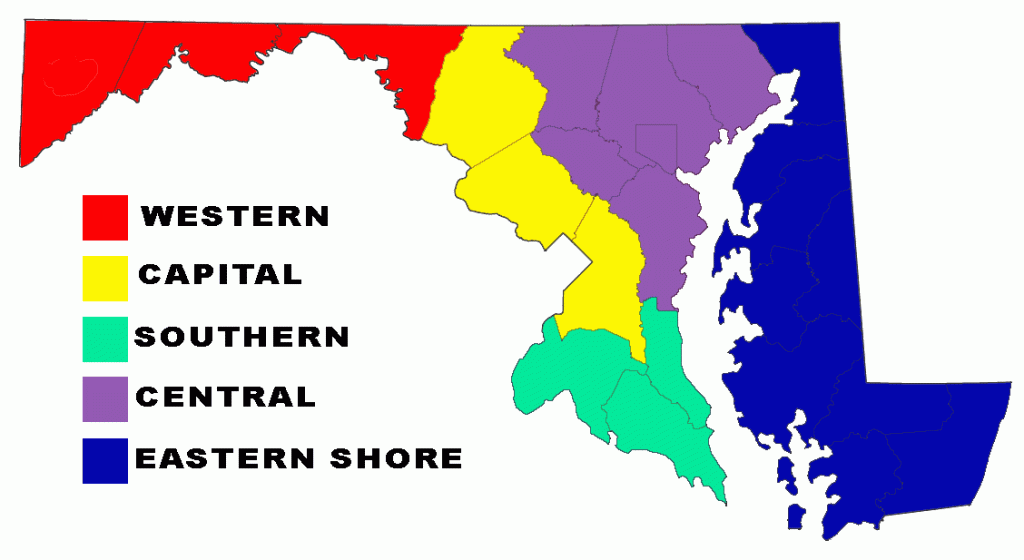
The Panhandle
Also known as the “western region,” this area primarily rural, mountainous, and gorgeous.
In addition to out of state tourists, many flock to this area on the weekends to escape the summer heat, or to go skiing in the winter.
With West Virginia to the west, the Potomac river to the south, and separated from Pennsylvania to the north by the famous Mason-Dixon line, this region is well-isolated from the rest of Maryland.
Culturally, the people here are more Appalachian in outlook.
They possess strong family loyalty, a deep connection to the land, love of God, and fierce independence.
Summers here are 10 degrees cooler, and the winters harsher, with 25-100 inches of snow, annually.
Median home values here are just over $164,000. And the median income is just below $50,000 dollars.
In Cumberland (pop. 19,480) and Hagerstown (pop. 40,222), crime is somewhat higher than in other parts of Maryland, and the poverty rate for the region as a whole is 13.3%.
Capital Maryland
Also called “The Washington DC Metropolitan area,” this region has a population of 2,219,874, spread across 3 counties:
- Frederick County – pop. 259,547
- Prince George’s County, aka “PG county” – pop. 909,327
- Montgomery County – pop. 1,051,000
This region regularly hits the various “top 10 places to live” lists due to its hot job market, and the closeness to the nation’s capital.
There are literally tons of things to do here, much of them free:
- The National Cherry Blossom Festival (March 20 through April 13)
- Broadway plays at the Kennedy Center
- The National Art Gallery
- Day-hiking in the Shenandoah Mountains
- Visit over 200 monuments scattered all over DC, especially on the National Mall.
- Party to the live music of up-n-coming bands at the 9:30 Club.
- Catch a double-header at National’s Park.
- Visit the world-famous Smithsonian’s 17 museums,
- 13 gardens, and of course the National Zoo.
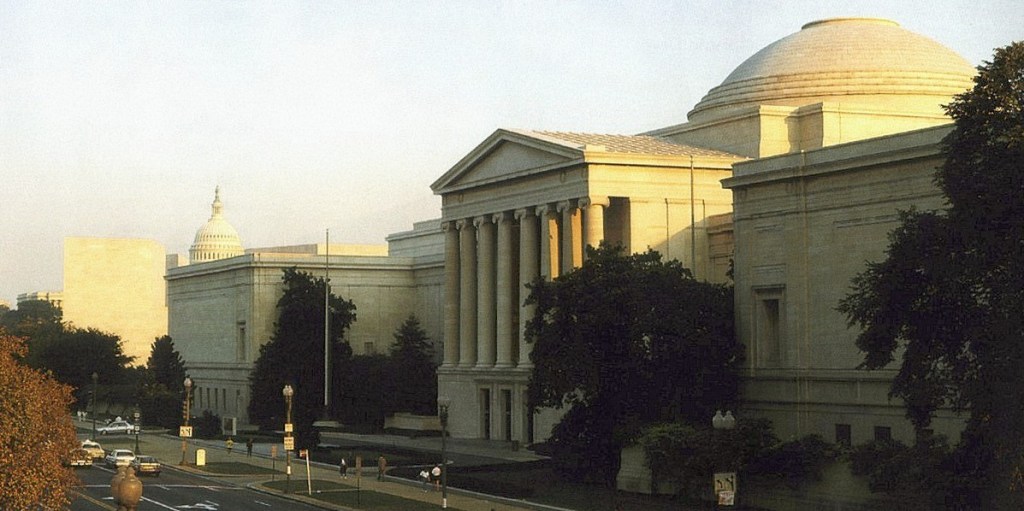
Montgomery county schools rank #2 in the state, second only to Howard county.
Eight communities in Montgomery county were listed in the top 10 places to live in Maryland by Money Magazine.
Prince George’s County holds some of the richest African American-majority counties in the nation. In fact, 5 neighborhoods — Fort Washington, Friendly, Kettering, Mitchellville, and Woodmore — are the top 10 wealthiest black communities in the nation.
Frederick County, located in northern Maryland, borders Pennsylvania, West Virginia, and Virginia just across the Potomac River. It’s home to “Catoctin Mountain Park,” where you’ll find the presidential retreat, Camp David.
The county still has significant farm land and is the state’s largest dairy producer, generating a third of the state’s milk production.
As for jobs … well … as already stated, the Federal Government is a massive employer in Maryland, and in this area in particular.
Top employers in the Capital Region:
- Fort Detrick
- GEICO (HQ)
- HMSHost (HQ)
- Joint Base Andrews
- Lockheed Martin (HQ)
- Marriott International (HQ)
- NASA Goddard Space Flight Center
- National Institutes of Health (HQ)
- Natial Oceanic & Atmospheric Administration (HQ)
- Northrop Grumman
- Ritz-Carlton Hotel Company (HQ)
- University of Maryland
- UPS
- U.S. Census Bureau (HQ)
- U.S. Food & Drug Administration (HQ)
- U.S. Internal Revenue Service
Kind of amazing, wouldn’t you say? But all of this prosperity comes at a cost.
To live a “modest yet adequate standard of living,” Capital Region residents with a family of 4 need an annual salary of more than $123,975.
This, according to “The Economic Policy Institute.”
Here’s a quick look at the cost of living for these 3 counties as compared to the National Average:
| Cost of Living | Montgomery | PG | Frederick |
| Overall | +39.4% | +21.3% | +13.3 |
| Groceries | +13% | +7.9% | +8.6 |
| Health Care | -7.4% | -7% | -10.1% |
| Housing | +95% | +28.9% | +38% |
| Utilities | +4.8% | +9.1% | -3.7% |
| Transportation | +38.7% | +44.4% | +3% |
Pretty expensive, but the drawbacks don’t end there.
The Capital Region has the 2nd worst traffic in the nation. Only New York City’s is worse.
A typical one-way commute takes an average of 36 minutes. On a good day!
That said, there are other commuting options besides your car:
- The train
- The subway
- Busses
- Ride-sharing
Many employers subsidize most if not all of the cost of the public transportation options.
Another thing to consider when moving to this part of Maryland is what I call the “DC Mindset.”
In this job-centric place, you won’t necessarily get to know your neighbors.
As in, at all … Even if you try to!
Everyone’s from somewhere else or going somewhere else, and they’re doing it as fast as possible.
Unless they belong to a church, people tend to make friends through their jobs.
The intense nature of employment here makes happy hours a big part of the culture.
When you DO make friends, visiting and doing things together can be a chore, given the terrible traffic and urban sprawl.
Meet-up groups are a mixed bag. They’re often just happy hours with people you DON’T work with.
I’ll wrap up the Capital Region with a quick bit about home values.
The average median home value here is $374,967.
Montgomery County homes are the highest, coming in at just under $500,000.
- Montgomery County: $489,000
- Prince George’s County: $320,500
- Frederick County: $315,400
And if you decide to rent, well, a one-bedroom apartment in the region goes for roughly $1,500 a month.
Central Maryland
This region has a population of 2,710,489.
Anchored by Baltimore, Maryland’s largest city, it offers waterfront villages and mill towns, beautiful farmlands, the rolling hills of horse country, professional sports teams, the waters and beaches of the Chesapeake Bay, and the oldest state capital in the nation.
Though the DC metropolitan area is certainly rich, the crown of all Maryland’s jewels is Howard County, ranked the 3rd wealthiest county in the nation.
Howard also has the state’s best school district.
Niche.com awarded the district an A+. It’s the only A+ it gave in ALL the state’s 25 school districts.
Howard County has student–teacher ratio of 13 to 1.
59% of students are proficient in math, and 55% in reading.
Six cities in Central Maryland made the list of the 20 best places to live.
I’ll mention just three of them:
Annapolis (pop. 37,791) is a really cool place if you enjoy history, sailing, and a cosmopolitan flare.
An hour west of Washington DC, and an hour south of Baltimore, this maritime city has a bustling downtown with loads of restaurants and shops.
Its gorgeous waterfront is peppered with marinas, sailboats, yachts and great waterside pubs.
Over 350 years old, Annapolis is the oldest state capital in the country.
It actually served as America’s temporary Capital from 1783 to 1874.
Downtown Annapolis is a bustling, living museum.
Here you’ll find lovingly preserved 18th and 19th century buildings, and over 5 blocks of cobblestone streets.
Next up is Mount Airy ( pop. 9,387 ), ranked 11th in the state, and one of the smallest towns on the list.
This town is actually split between 2 counties – Frederick and Carroll.
It’s an hour north of DC and 40 minutes west of Baltimore.
The residents who live here love it!
Its location gives them that small-town feel, while still having easy easy access to urban areas when needed.
You’ll find historic buildings in the town, and beautiful farmland out side it.
Mount Airy is big on creating an environment where residents can stay active.
It has 10 parks where you can go for a stroll, train for a 5K, catch some fish, or play some leisurely tennis.
And of course you can meet up with friends at one of the many restaurants and pubs.
The school district is in Mount Airy very good, and received an overall grade of A.
60% of students are at least proficient in math, and 52% in reading — well above the state average.
Mount Airy crime rate is 63% lower than the US average.
Your chance of being a victim is 1 in 107.
Not only that, but the year-over-year crime rate dropped more than 55%.
While Mount Airy is a small town, it’s cost of living is pretty steep.
The median home value is $361,500, while the median household income is $112,955.
This makes it 35% more expensive to live in Mount Airy than the national average.
To live in Mount Airy means you need to commute for a good salary.
The average one-way commute time is nearly 41 minutes.
Money Magazines LOOOOVES Ellicott City ( pop. 72,247).
It’s repeatedly listed in their “Top 10 places to live in the United States.”
The city is split into two communities:
- Historic Ellicott City
- Greater Ellicott City
You’ll find great shopping in both, but residents and tourists flock to the historic side for all the fantastic antique shops and crafts.
There are great restaurants on Main Street, charming taverns, and delicious craft beers at the local brewery.
Ellicott City is close to Annapolis, Baltimore, and DC, so residents have lots of options when it comes to where they can work and play.
Residents typically commute 30 minutes each-way when going to work.
The median household income is $124,059, one of the highest in the state.
And that high income is needed.
Ellicott City’s median home value is $522,700, and the median rental is around $1,600 a month.
Southern Maryland
We leave the Central Region and head to Southern Maryland. Here, we find the southern most counties on the “Western Shore” of the Chesapeake Bay.
Nearly three-fourths of the area is still rural, and home to Amish and Mennonite communities.
It’s an ideal place if you love nature, fishing, great seafood, beaches, kayaking pristine waterways, wineries, crab cakes and oysters, cozy cottages, and a more traditional lifestyle.
People are starting to move to Southern Maryland from the Metro Areas in search of a quieter lifestyle and lower cost of living.
Two small towns experiencing this exodus also make various “best places to live” lists.
La Plata ( pop. 9,160 ) is a mainly white-collar residential area.
Many residents commute to nearby Washington, DC, or Baltimore for work.
As a result, the town is experiencing an economic boom.
The median household income is $92,738, and the median property value is $336,700.
The typical commute time is 31 minutes.
Chesapeake Beach ( pop. 5,930 ) is a small town with a young population.
It’s friendly, expensive, and loaded with marinas, charter fishing, restaurants, and bars.
There’s also a water park and a resort spa hotel.
The city is listed on the National Register of Historic Places.
The median income is $102,679, and the Median property value is $313,600.
The Eastern Shore of Maryland.
Lying in the Atlantic Coastal Plain, this region is made up of 9 counties, 7 of which have Chesapeake Bay coastlines.
Only 1 of the 9 counties – Worcester ( Wooster ) – borders the Atlantic Ocean.
Largely rural, the Eastern Shore has 3 primary industries:
- Fishing along the coasts
- Farming, which includes large-scale chicken farms
- Tourism which tends to be centered around the Atlantic coast resort of Ocean City
The area is loaded with historic and natural landmarks on bike trails or quiet country roads.
If you HATE quiet country roads, you can explore many of the rivers, creeks, inlets, and bays by boat.
The fresh fish, crabs and oysters found here are something residents and visitors look forward to all year.
Probably the coolest thing you’ll find are the famed wild ponies of Assateague, which wander freely on the beaches of the Assateague Island National Seashore.

Acroterion, CC BY-SA 4.0, via Wikimedia Commons
Lovely as all this is, it should be noted that none of the cities and towns in the Eastern Shore made the list of best places to live in Maryland.
The Eastern Shore, like the Western Region, has a lot of poverty, and some of the large towns along the Eastern Shore are ridden by crime.
Thanks!
There’s a lot more to Maryland than this, of course, but I hope that helps you in your quest to find the best place to live for you. If you get a chance, check out the video I made about this wonderful state. You can find it by clicking “Video Guides” in the menu at the top of this page.
Until later, best of luck, and be sure to Start Packing!
 Start Packing

